
OPERA BIRMINGHAM PRESENTS
CAVALLERIA RUSTICANA & I PAGLIACCI
In Partnership with Samford University School of the Arts
April 17th & 19th
Dorothy Jemison Day Theater at Alabama School of Fine Arts
notes from the Conductor
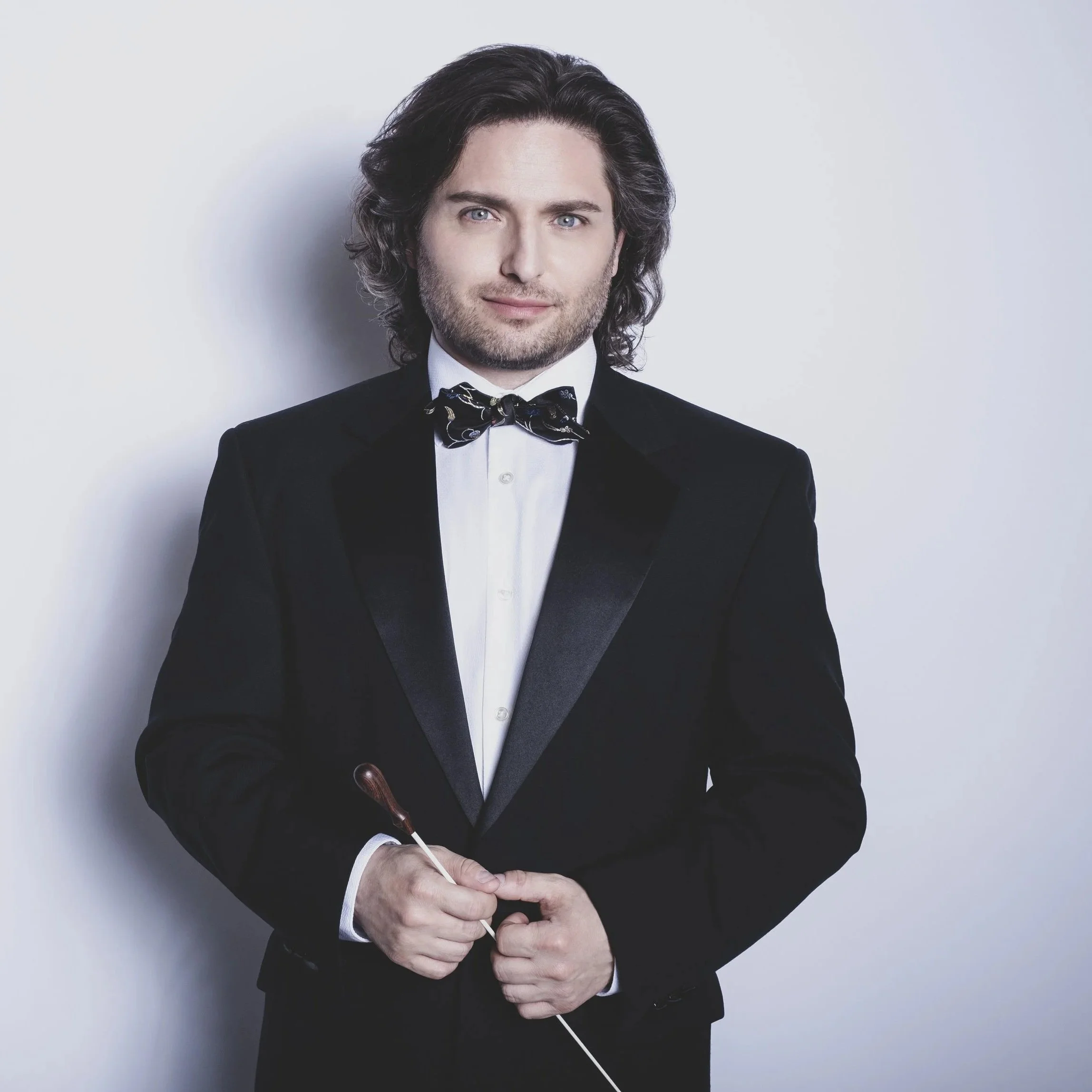
Few operatic double bills can rival the pairing of Cavalleria Rusticana and Pagliacci. Written shortly after the reunification of Italy and within two years of one another, these works have become mainstays of the repertoire in the Italian verismo tradition.
In Cavalleria Rusticana, Mascagni immerses us in the world of a rustic Sicilian village. What strikes me most as a conductor is the way the orchestra is responsible for much of the emotional content, moving without effort from daily life to sacred ritual, simmering jealousy, and irreversible violence.
The Intermezzo, famous in its own right, often appears on orchestral programs and presents great musical and technical challenges for students of conducting. In context, this music provides unique storytelling as we hear reworkings of many previously-heard themes of Sicilian life through Mascagni's eyes and ears.
In contrast, Pagliacci blurs the line for the audience between performance and reality. Here, the stage becomes a mirror, and the audience becomes implicit in what unfolds. Leoncavallo’s score is tightly constructed, theatrical, and deeply psychological, relying heavily on motivic relationships rather than sweeping melody.
The Prologue reminds us that we are about to witness is drawn from life itself, though the distinction between player and character has completely evaporated by the end. Pagliacci also offers an Intermezzo, though more an abstract recollection of moments rather than a complete thought.
Together, more than a traditional double bill, these operas are two perspectives on the human impulses, love, betrayal, honor, and the consequences of violent passion. From a village square during the Assumption Feast, to the fragile illusion of the traveling theater, both arrive at the same inevitable truths.
For those of us in the orchestra, this evening is made from overwhelming lyric beauty that defines Italian opera while embracing the verismo that gives these works their enduring power. It is my hope that you experience these operas as we have; not a work in a museum, but as reflections of human nature which are uncomfortable, beautiful, and profoundly real.
- Tyson Deaton
PLEASE SILENCE ALL ELECTRONIC DEVICES.
NO TEXTING DURING THE PERFORMANCE.
PHOTOGRAPHY AND RECORDING OF ANY KIND ARE PROHIBITED.
THANK YOU!
FEATURING
Cast
Cavalleria Rusticana
Music by Pietro Mascagni
Libretto by Giovanni Targioni-Tozzetti & Guido Menasci
Click on names to view bios
Turiddu | Cameron Schutza*
Santuzza | Madison Montambault*
Lola | Liv Sand*
Alfio | Dan Seigel
Mamma Lucia | Ellen Mitchell*
Turiddu (Cover) | Joe Robinson
Santuzza (Cover) | Lauren Tinsley
Lola (Cover) | Isabelle Knowles^
Pagliacci
Music by Ruggero Leoncavallo
Libretto by Giovanni Targioni-Tozzetti & Guido Menasci
Canio | Cameron Schutza*
Nedda | Joylyn Rushing*
Tonio | Jose Maldonado*
Silvio | Willian da Silva
Beppe | Leland Garris^
Nedda (Cover) | Zoe Rose Pallas
Silvio (Cover) | Dan Seigel
Chorus
Abigail Williams*
Zoe Willis*
Jonathan Mikkel Smith
Joseph Robinson
Leland Garris^
Jacob King*
Michael Melcher*
Drew Duncan
Andy Duxbury
Michael Thaxton
Willian da Silva
Carabelle Carnall*
Emily Scott
Sydney Clyde*
Bianca Fasanelli*
Macy Rose*
Taylor Yount*
Gracie Youngman*
Avery Anderson*
Ellen Mitchell*
Heather Thaxton
Isabelle Knowles^
Kenzie Burchfield*
Liv Sand*
* Opera Birmingham debut
^ Opera Birmingham Freeman Studio Artist at Samford University
Featuring Musicians from Alabama Symphony Orchestra
PRODUCTION
Creatives
Conductor | Tyson Deaton
Stage Director | Kristin Kenning
Production Manager | Therrin Eber
Stage Manager | Alexis Reeves
Assistant Stage Manager | Sammy Sledd
Set Designer | David Gordon
Costume Designer | Mary Taylor Gurney
Lighting Designer | Matt Reynolds
Wigs/Hair/Makeup Designer | Holly McClendon
Chorus Master | Dan Seigel
Rehearsal Pianist | Eric Andries
Chorus Rehearsal Pianist | Sebastian Black
Choreographer | Alisa McCool
Children’s Chorus Mistress | Emily Scott
Costume Assistant/Dresser | Trinity Coblentz
SYNOPSIS
Cavalleria Rusticana
Turiddu has recently returned from military service to discover that his former lover, Lola, has married Alfio, a local carter, during his absence. Jealous, Turiddu began a relationship with Santuzza, whom he has since abandoned in favor of an affair with Lola.
As dawn breaks on Easter morning in their Sicilian village, Turiddu is seen on Lola’s balcony, singing of her beauty. Santuzza, assumed to be pregnant with Turiddu’s child, witnesses the affair between Turiddu and Lola. Santuzza seeks out Turiddu’s mother, Mamma Lucia to expose the affair in the hopes that she will convince Turiddu to marry her. Mamma Lucia is unhappy and confused, believing Turiddu to be out of town. Lola’s husband Alfio arrives home from his travels, and most of the town enters the church to celebrate Easter. Outside the church, Santuzza begs Turiddu to return to her. Lola arrives, mocking Santuzza, and Turiddu eventually leaves Santuzza alone in the square as he joins the church service. In anguish, she curses him. Soon after, Alfio reappears and Santuzza, overcome with emotion, reveals Lola’s infidelity. Furious, Alfio vows revenge and departs, leaving Santuzza filled with regret.
After the church service, the villagers gather at the tavern. Turiddu leads them in a drinking song, but tension arises when Alfio arrives and rejects Turiddu’s offer of wine. Alfio challenges Turiddu to a duel. Following Sicilian custom, the two men embrace, and Turiddu, in a token of acceptance, bites Alfio’s ear, drawing blood which signifies a fight to the death. Before leaving, Turridu asks his mother to care for Santuzza if he does not return. As he goes to meet Alfio, Santuzza and Lucia embrace. Moments later, a voice is heard crying: Turiddu has been killed.
PAGLIACCI
A traveling troupe of clowns arrives to much excitement in a Sicilian village where Canio, head of the troupe, invites the townspeople to an evening performance. When a villager jokingly suggests that Tonio is pursuing Canio’s wife, Nedda, Canio sharply warns that while such jokes and behavior may belong onstage, in life it would be met with deadly consequences.
After the crowd disperses, Nedda remains behind, troubled by Canio’s jealousy. Longing for freedom, she reflects on the flight of birds overhead. Tonio approaches and declares his desire for her, but when she rejects him, he attempts to force himself upon her. Nedda resists and drives him away; he retreats, vowing revenge. Soon after, Nedda’s lover, Silvio, arrives. The two reaffirm their love and resolve to flee together that night. Unseen, Tonio overhears them and retrieves Canio, but Silvio escapes before he can be caught. Enraged, Canio demands that Nedda reveal her lover’s name, but she refuses. As his anger threatens to turn violent, Beppe intervenes, and Tonio urges Canio to wait until the performance to uncover the truth. Left alone, Canio is overcome with grief, forced to prepare for the role of a clown while consumed by betrayal.
That evening, the villagers gather for the play, among them Silvio. Nedda performs as Columbina, with Beppe as her lover Harlequin and Tonio as the servant Taddeo, while Canio takes the role of Pagliaccio, Columbina’s husband. Within the play, Columbina and Harlequin plot to deceive her husband, but when Pagliaccio appears unexpectedly, Harlequin escapes. Taddeo fuels Pagliaccio’s suspicions, and the line between performance and reality begins to dissolve. Abandoning the pretense of the play, Canio demands that Nedda confess her lover’s identity. She attempts to continue in character, calling him Pagliaccio. The audience, captivated by the intensity, believes this is still part of the drama.
Enraged, Canio breaks completely from the performance, again asking for the name of Nedda’s lover, she drops the pretense and swears she will never tell. In a violent outburst, Canio stabs Nedda. As she calls out to Silvio, he rushes forward, only to be killed as well. The illusion of theater collapses before the horrified crowd. In the stunned silence that follows, Tonio announces “la commedia è finita!” – “The comedy is finished!”
Prologue Translation: “ May I? If I may? My dear audience, allow me to introduce myself, I am the Prologue. The authors of this performance, using typical characters from the old days decided to resurrect me as well. But not to say: ‘Our tears are merely pretend, don’t be alarmed by our acting!’ No, the authors have instead chosen to depict for you a slice of life. Their statement of principle is that all artists are human beings… and since they are writing for everyday folk, they drew their inspiration from reality. Memories, like fledglings in a nest, sang to their heart’s depths… so they wrote and composed with real tears in their eyes, their sobs punctuating the rhythm of their words. And so, the love you see portrayed is the same love we all feel. You will see the tragic fruits of hate, pain, rage, and cynical laughter! But you, dear audience, you will not see acting, rather, you will see our souls... humans made of flesh and bone. People who, just as you do, breathe the same air in this God-forsaken world of ours! So, that’s what you can expect...now listen and watch how it all unfolds. Time to begin!
SPECIAL THANKS
David Glenn for lending props and equipment from Samford School of the Arts
Sarah Wright for lending Beppe’s costume from Mobile Opera
Robert Smith for designing and building the “Monstrance” prop used in Cavalleria Rusticana
Ed Gurney for making fruit basket props
Opera Louisiane for their generous donation of supertitles
SPONSORS


Isabelle Knowles and Leland Garris, the artists participating in the Opera Birmingham Studio at Samford University, are generously sponsored by Michael J. and Mary Anne Freeman
The set is graciously sponsored by Brent and Karyn Uptain, and was originally produced at The Sarasota Opera.
Our season has been made possible, in part, by grants from the Alabama State Council on the Arts, The Daniel Foundation of Alabama, Hugh Kaul Foundation, and with funding from the National Endowment for the Arts.
Student tickets are supported by The Caring Foundation of Blue Cross and Blue Shield of Alabama.
ASL interpreters for the season are sponsored by Michael J. and Mary Anne Freeman.
The Rehearsal Pianist is sponsored by Mimi Jackson
Steinway is the official piano of Opera Birmingham